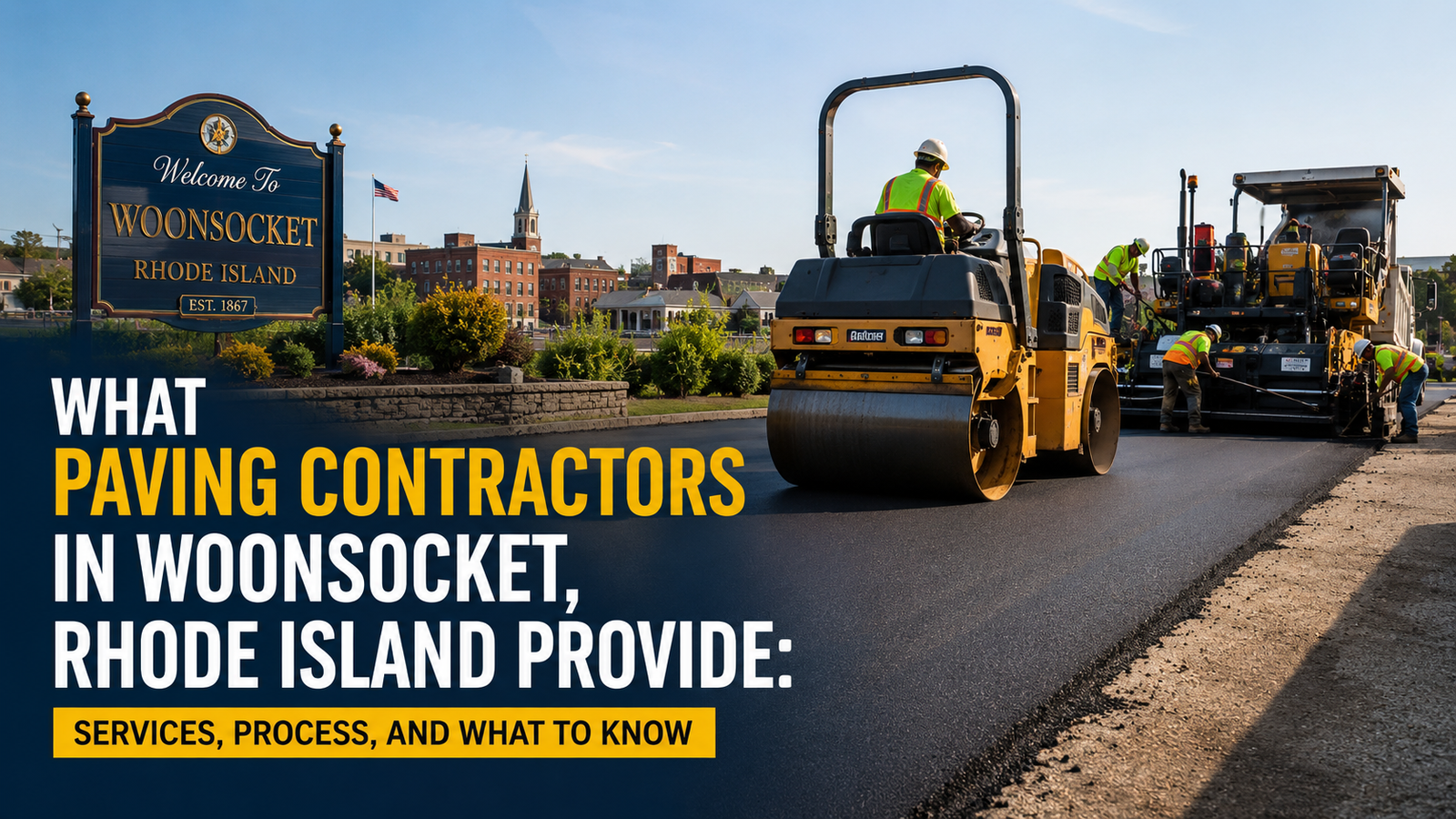
When Woonsocket property owners need a driveway replaced, a parking lot resurfaced, or a crumbling asphalt surface repaired, the right professional to call is a Paving Contractor Woonsocket. But not all paving contractors provide the same scope of services, operate with the same level of expertise, or deliver the same quality of results. Understanding what professional paving contractors in Woonsocket offer the specific services, the process involved, and what differentiates quality work from substandard results helps property owners make informed decisions about their paving projects.
The Full Scope of Paving Contractor Services
New asphalt installation is the most comprehensive paving service creating a paved surface where none existed before or replacing a surface that has deteriorated beyond the point where repair or resurfacing is appropriate. New installation starts from the ground up: excavation of existing material, grading to establish drainage slopes, placement and compaction of a gravel subbase, and then the asphalt itself in one or two paved lifts. Each phase affects the quality and longevity of the finished surface.
Asphalt resurfacing sometimes called overlay or paving over involves applying a new layer of asphalt over an existing surface that is still structurally sound but has deteriorated at the surface level. Resurfacing is less disruptive and less expensive than full replacement and is appropriate when the existing base is solid and the surface cracking or wear is limited to the upper layers of the pavement. The existing surface is typically cleaned and any significant cracks or depressions are addressed before the overlay is applied.
Crack filling and crack sealing address the surface cracking that develops in asphalt over time. Crack filling injecting rubberized or bituminous filler material into cracks prevents water infiltration that would accelerate deterioration. Crack sealing uses flexible sealant materials that move with the crack through freeze-thaw cycles without breaking the bond. Prompt attention to cracks is one of the most cost-effective maintenance practices for extending the life of an asphalt surface in Woonsocket’s climate.
Pothole repair addresses the localized failures that develop when water infiltrates the pavement, saturates the base, and the pavement surface fails under traffic loads. Proper pothole repair removes the failed material to solid pavement edges, fills with hot or cold asphalt patch, and compacts the repair to be flush with the surrounding surface. Temporary pothole filling simply dumping material in without edge preparation and proper compaction provides only short-term results.
Sealcoating applies a liquid bituminous or acrylic coating over the asphalt surface, forming a protective barrier against UV oxidation, water infiltration, oil and fuel spills, and the mechanical abrasion of vehicle traffic. Sealcoating in Woonsocket’s climate is typically recommended every 3 to 5 years on residential driveways and annually or biannually on high-traffic commercial lots. It does not repair existing cracks or damage it protects against future damage and slows oxidation of the asphalt binder.
Line striping applies the painted traffic management markings on commercial parking lots and roadways parking space lines, directional arrows, crosswalk markings, ADA accessible space symbols, fire lane designations, and other traffic control markings. Proper line striping improves traffic flow, maximizes parking capacity, ensures ADA compliance, and gives commercial properties a professional, well-maintained appearance.
What Makes a Quality Paving Job in Woonsocket
The quality of a paving project in Woonsocket is determined primarily by factors that happen before any asphalt is laid. Subbase preparation is the most critical determinant of long-term performance. An asphalt surface is only as strong and durable as the base it rests on. In Woonsocket’s soil conditions which include clay-rich soils that are susceptible to frost heave and poor drainage in some areas an adequate depth of well-graded gravel base, properly compacted, is essential. Industry standards typically call for 6 to 8 inches of compacted gravel base for residential driveways and greater depths for commercial applications.
Drainage design is equally critical. Asphalt that retains water in depressions, along edges where the grade slopes toward the pavement rather than away, or in areas without adequate crown will deteriorate rapidly through water infiltration and freeze-thaw damage. A quality paving contractor grades the surface to drain water away from structures and off the paved area efficiently. Woonsocket’s terrain, which includes some low-lying areas near the Blackstone River, makes drainage design particularly important.
Material quality matters. Hot mix asphalt is produced at asphalt plants to specific mix designs that determine the aggregate gradation, binder content, and performance characteristics. Higher polymer content in the binder improves flexibility and resistance to cracking, which is valuable in Rhode Island’s climate. Rhode Island’s Department of Transportation has increased polymer content requirements for state road projects; private paving contractors who apply similar thinking to residential and commercial projects deliver better long-term performance.
Compaction is the final critical factor. Asphalt that is not adequately compacted while still hot has lower density, higher air void content, and reduced durability compared to properly compacted asphalt. Competent paving crews use appropriate rollers, complete compaction while the asphalt is within the correct temperature range, and achieve the density needed for long-term performance.
Choosing a Paving Contractor in Woonsocket
Rhode Island does not require a separate paving contractor license, but paving contractors who perform construction work exceeding certain thresholds are required to hold a Rhode Island contractor registration. Verifying that a contractor is properly registered and carries general liability and workers compensation insurance protects property owners from liability in the event of accidents, property damage, or work disputes.
Experience specifically in Rhode Island and the Woonsocket area matters because local conditions the specific soil types, the frost depth, the local asphalt plant mix designs available, and familiarity with local permitting and right-of-way requirements for work that affects public sidewalks or curb cuts all influence project quality. A contractor who has worked extensively in Woonsocket and Providence County understands these local factors and incorporates them into their approach.
Frequently Asked Questions About Paving Contractors in Woonsocket
What is the difference between resurfacing and full replacement? Resurfacing applies new asphalt over an existing surface and is appropriate when the base is solid and deterioration is limited to the surface layers. Full replacement removes all existing material, repairs or replaces the base, and installs new asphalt throughout. Full replacement is required when there is base failure, significant drainage problems, or severe structural damage.
How thick should a new driveway be in Rhode Island? Rhode Island’s climate and frost depth typically require at least 3 inches of compacted asphalt over a 6-to-8-inch compacted gravel base for residential driveways. Areas with poor drainage or heavy vehicle traffic may require greater thickness.
Does line striping require a permit in Woonsocket? Line striping on private commercial property generally does not require a permit. Work that affects the public right-of-way including curb cuts, sidewalk approaches, and work within the public road right-of-way may require permits from the City of Woonsocket’s Department of Public Works or Rhode Island Department of Transportation depending on the specific location.